

Mary Magdalene and the Divine Gardener
How Jesus transformed Mary Magdalene through mercy and patience—and what her witness teaches us about hope and faithful presence.

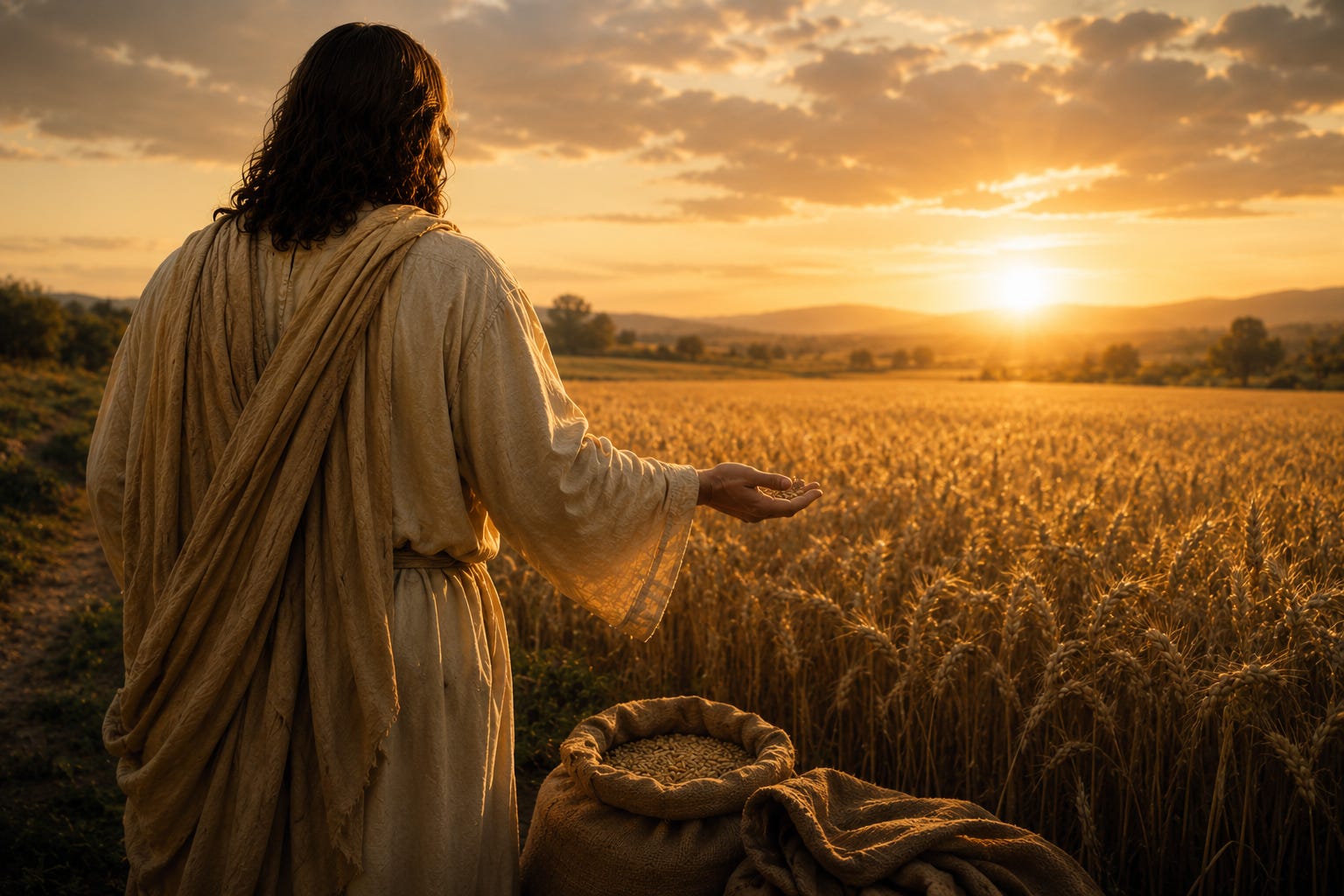
Jesus, the Divine Gardener, sows seeds of hope.
This article refers to the readings from 16th Sunday in Ordinary Time - Year A Wisdom 12.13, 16-19 and Matthew 13.24-43
By: Deacon Mike Walsh ©
The Divine Gardener
A priest stopped by a farmer’s house and said, “My friend, you and God have done a wonderful job with this farm.” The farmer smiled and answered, “Thank you, Father—but you should have seen it when God had it all to himself!”
Anyone who has ever planted a garden knows that the hardest thing to grow is often what you planted. Tomatoes need watering. Flowers need care. But weeds seem to grow all by themselves. Jesus responds to this question in the Parable of the Wheat and the Weeds:
Where, then, did these weeds come from? (Matt. 13:27)
Jesus compares the Kingdom of Heaven to a field in which good seed and weeds grow together. The servants want to act immediately. They want to pull out everything that does not belong. But the master tells them to wait, because in trying to remove the weeds they may also uproot the wheat.
This parable reveals something important about God. The Book of Wisdom tells us that God is powerful, yet judges with mildness and governs with great patience. God gives people time to repent, time to grow, and time to become what they were created to be. God does not give up on us as quickly as we sometimes give up on ourselves—or on one another.
We are often very quick to decide who is wheat and who is a weed. We see a person’s mistakes, reputation, illness, addiction, anger, or brokenness and assume that we know the whole story.
But the Divine Gardener sees something more. Jesus sees not only who we are today, but who, through grace, we may yet become.
The Harvest of Grace
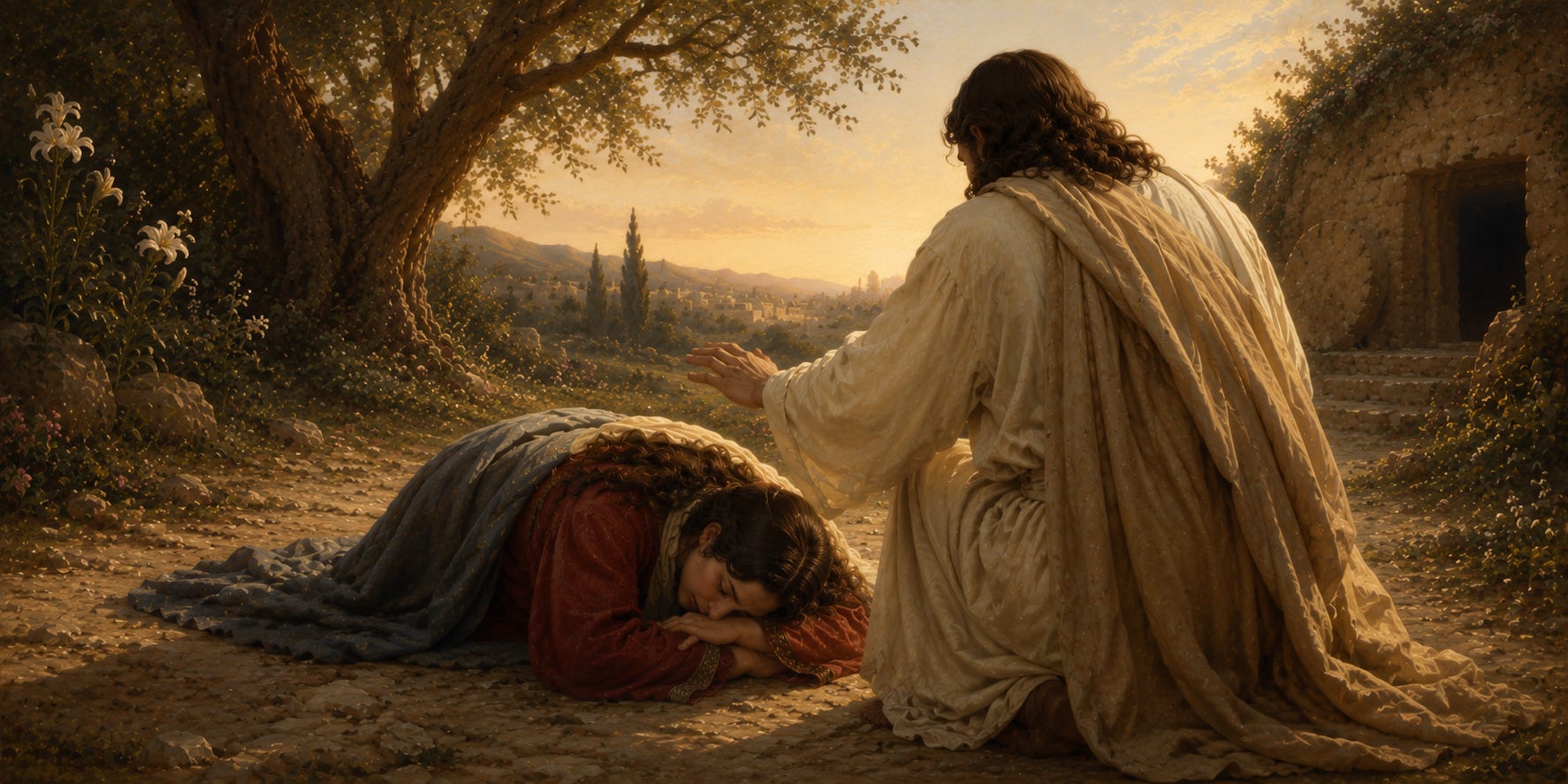
Jesus, the Divine Gardener gently restores Mary Magdalene
Today the Church celebrates the Feast of Saint Mary Magdalene.
Her story is one of the most beautiful examples of the patience and transforming love of the Divine Gardener.
The Gospel tells us that Jesus cast seven demons out of her. She had known torment and suffering. Others may have feared her, avoided her, or dismissed her. Yet Jesus did not treat her as someone to be pulled up and thrown away. He restored her dignity. He gave her hope. And he gave her a mission.
The woman whom others may have judged became one of Jesus’ most faithful disciples. She remained near him during his Passion, stood close to the Cross, and returned to the tomb while it was still dark. The person some might once have regarded as hopeless became the first witness to the Resurrection—the Apostle to the Apostles. What an extraordinary harvest the Divine Gardener produced in her life.
A Ministry of Presence

Mary Magdalene and the Blessed Virgin accompany a family with quiet compassion.
Mary’s faithfulness at Calvary reminds me of a friend who recently died after a long illness.
He was larger than life: successful in business, generous with family and friends, and the kind of person everyone noticed when he entered a room. Then everything changed. What began as one health challenge became a series of battles lasting more than five years.
Gradually, many of the things that once seemed to define him fell away. Success could not cure him. Determination could not cure him. Wealth could not cure him.
But something else became visible.
Through every setback, people walked with him. Family and friends stayed close. In a special way, his wife and daughter became his companions on the journey. They attended appointments, listened through difficult conversations, encouraged him, worried, prayed, and cried. They accompanied him through fear, uncertainty, and suffering.
As death drew near, there was less that medicine could do. The focus moved from curing to caring, from treatment to accompaniment, from fighting death to helping someone live faithfully through his final days. They could not remove his suffering, but they could remain present. They stayed. They loved him to the very end.
That is what Mary Magdalene did at the Cross. She could not stop the suffering of Jesus. She could not fix what was happening. She could not take away the grief of his Mother.
But she could remain.
Her ministry at Calvary was a ministry of accompaniment, comfort, and faithful presence. Sometimes the greatest act of love is not finding the right words or solving the problem. Sometimes it is simply refusing to leave.
After Jesus died, she returned to the tomb carrying myrrh and spices, intending to perform one final act of love for the one she believed she had lost. In Jewish burial customs, this was a sacred work of mercy—an act of reverence offered to the dead. It was the last gift she believed she could give her Lord.
For this reason, the Eastern Church honours her with the beautiful title:
Mary Magdalene, the Myrrh-Bearer.
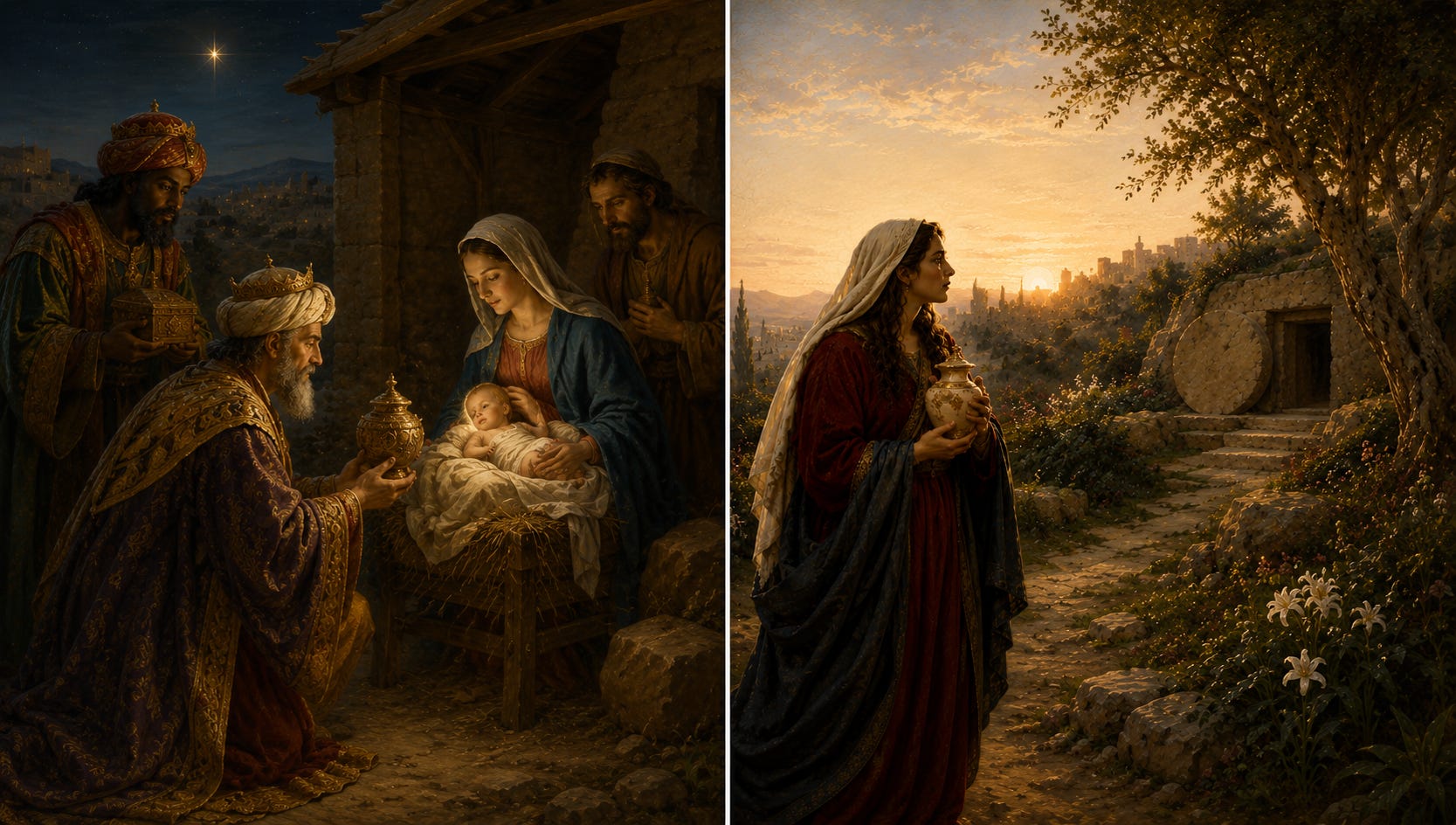
Myrrh accompanies Christ From Bethlehem to the empty tomb.
There is something profoundly beautiful about the title ”Myrrh-Bearer” because the earthly life of Jesus is framed by myrrh.
At Bethlehem, the Wise Men placed before the Christ Child gifts of gold, frankincense, and myrrh. Gold proclaimed a king. Frankincense proclaimed his divinity. Myrrh quietly foreshadowed his suffering, death, and burial.
Years later, Mary Magdalene comes to the tomb carrying that same precious gift. She believes she is performing one final act of love for the crucified Christ.
She expects to find death.
Instead, she is about to encounter Life.
Jesus also compares the Kingdom of Heaven to a mustard seed—the smallest of seeds that grows into something far greater than anyone imagines.
Mary Magdalene’s faith is like that mustard seed.
The death of Jesus wounds her faith, but it does not destroy it. While the Apostles hide behind locked doors, Mary keeps searching. Like the bride in the Song of Songs, she continues to seek:
Him whom my soul loves. (Song of Solomon 3:1-4)
Her faith may seem small, fragile, and overwhelmed by grief, but it is alive. Because she continues seeking Christ, that tiny seed of faith grows into something extraordinary.
She becomes the first witness to the Resurrection.
The “Divine Gardener” Calls Mary by Name
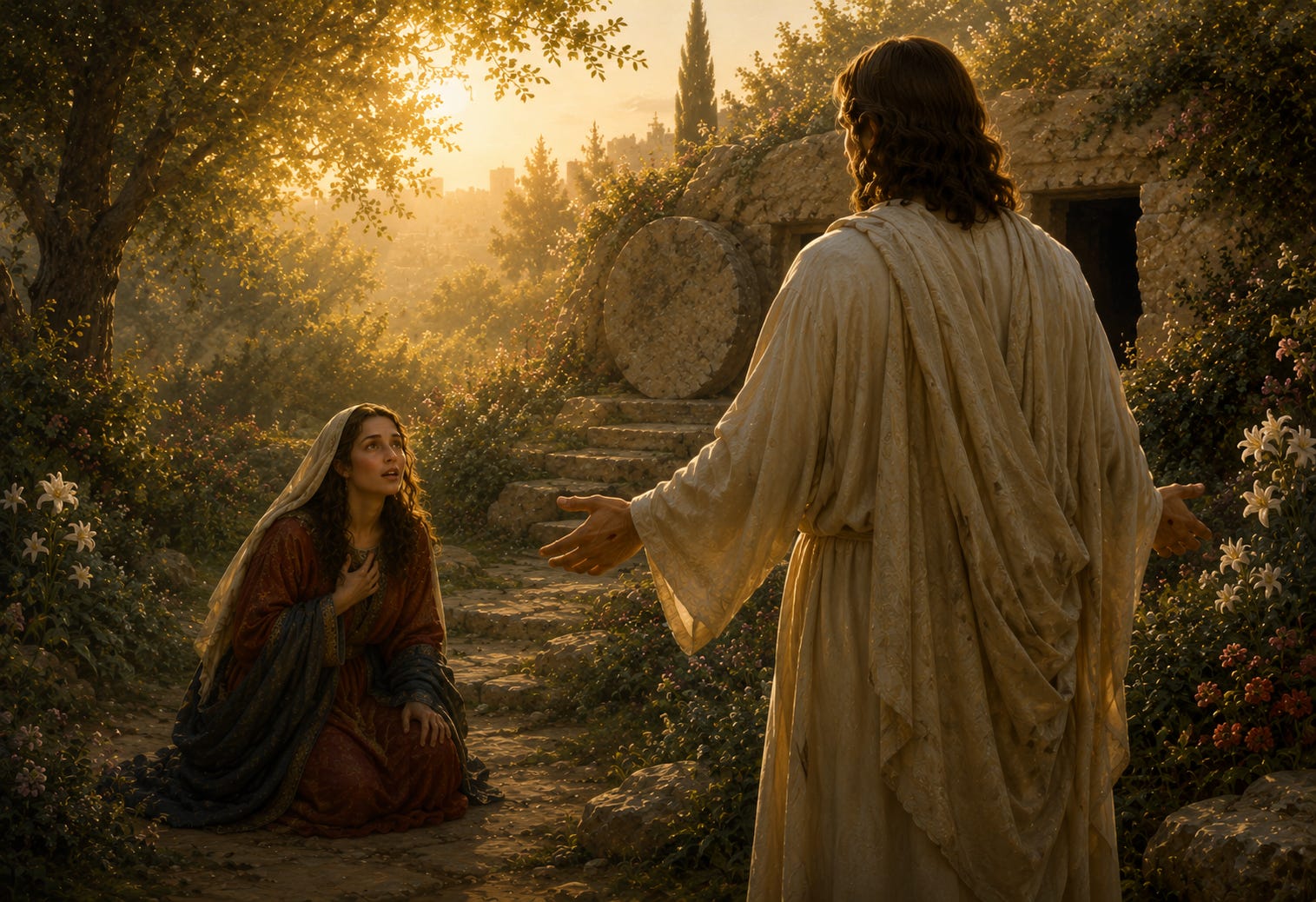
She came to the tomb expecting death and silence.
Instead, the risen Jesus- the Divine Gardner who spoke a single word to her:
Mary.
Everything changed.
The faithful companion of the Passion became the first messenger of Easter. The woman who had come carrying myrrh for the dead was entrusted with proclaiming the living Christ. The mustard seed had become a great tree. The Divine Gardener had brought forth an abundant harvest.
Mary Magdalene reminds us that we are not called to arrive before God already perfect. We are called to remain open to the healing and patient work of Jesus Christ, the Divine Gardener.
He can cultivate goodness where others see only failure. He can bring courage out of fear, compassion out of suffering, and new life from what appears to be a place of death.
Go in Peace
Perhaps we recognize a part of ourselves that feels more like a weed than wheat. Perhaps we are worried about someone we love and wonder whether that person will ever change.
The Parable of the Wheat and the Weeds reminds us not to lose hope. The Divine Gardener is patient. He knows what is growing beneath the surface. He is still at work in us, in our families, and in our world.
Like Mary Magdalene, we are called to remain faithful even when we cannot see the whole picture. We are called to accompany those who suffer, to keep seeking Christ when faith feels fragile, and to trust that the smallest seed of faith can bear extraordinary fruit.
May we allow Christ, the Divine Gardener, to cultivate the good within us, so that, like Mary Magdalene, we may go in peace to glorify the Lord by the witness of our lives.

Deacon Mike Walsh serves the Archdiocese of Toronto, leads the Daily TV Mass ministry, and writes about faith, service, hope, and discipleship.

As always……WONDERFUL!
Very enlightening 🙏
Thank you for this homily
Always learning more about living with Christ