

Memorial of Saints Martha, Mary, and Lazarus
July 29 Memorial honouring Martha's hospitality, Mary's contemplation, and Lazarus's resurrection.

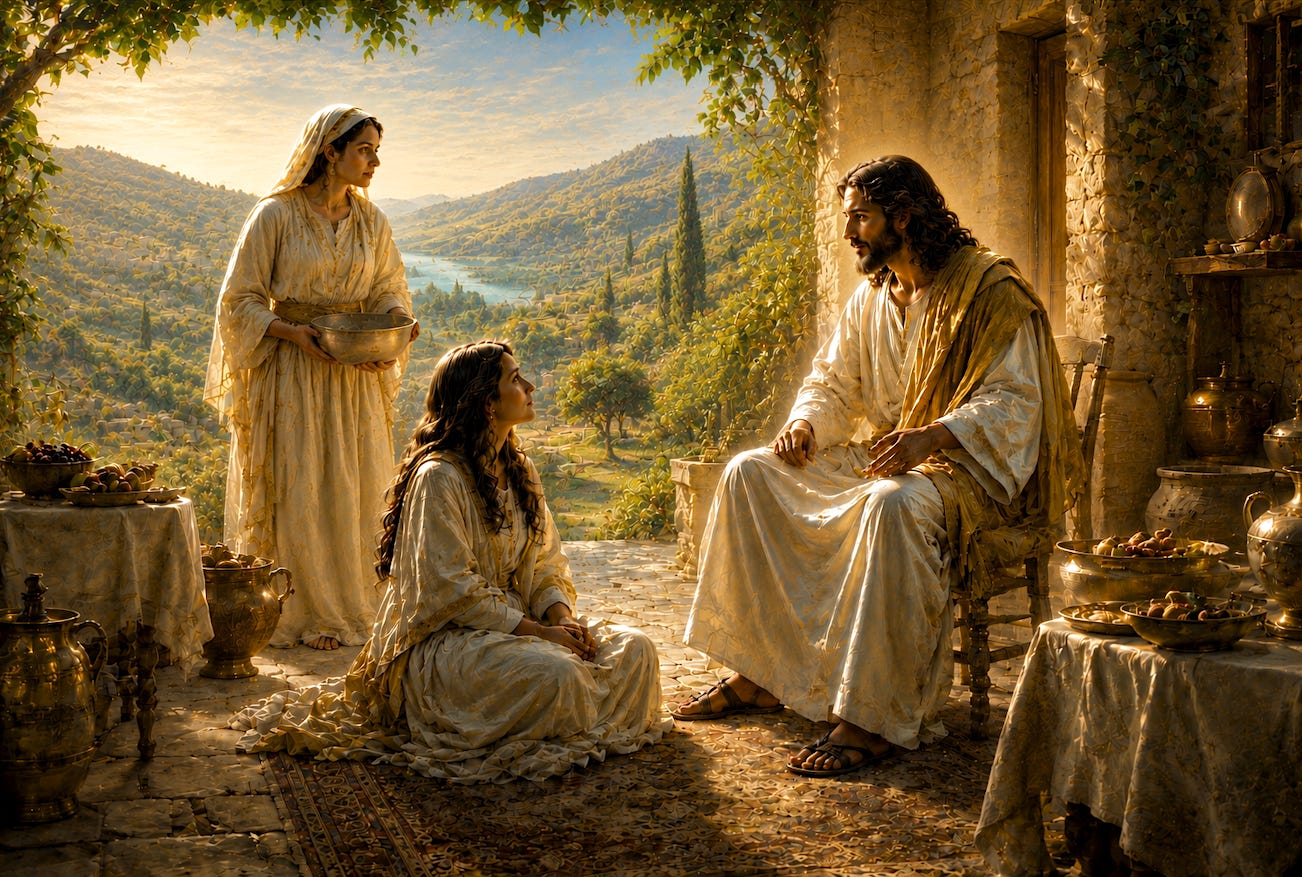
“. . . Jesus entered a village, where a woman named Martha welcomed him into her home. She had a sister named Mary, who sat at the Lords feet and listened to what he was saying.” (Luke 10.38-42)
The following reflection is based on today’s alternative scripture reading:
Jesus the Resurrection and the Life: John 11:17-27,
depicting Jesus raising Lazarus from the dead.
By: Fr. Ron Rolheiser ©
The Resurrection as Revealing God as Redeemer, not as Rescuer
Jesus doesn’t grant special exemptions to his friends, no more than God granted special exemptions to Jesus. We see this everywhere in the Gospels, though most clearly in Jesus’ resurrection. To understand this, it’s helpful to compare Jesus’ resurrection to what Jesus himself does in raising Lazarus from the dead.
The Lazarus story begs a lot of questions.
Here’s the story:
Lazarus’ sisters, Martha and Mary, sent word to Jesus that “the man you love is ill” with the implied request that Jesus should come and heal him. But Jesus’ reaction is curious. He doesn’t rush off immediately to try to heal his close friend. Instead he remains where he is for two days longer while his friend dies. Then, after Lazarus has died, he sets off to visit him.
As he approaches the village where Lazarus has died, he is met by Martha and then, later, by Mary. Each, in turn, asks him the question: “Why?” Why, since you loved this man, did you not come to save him from death? Indeed, Mary’s question implies even more: “Why?” Why is it that God invariably seems absent when bad things happen to good people? Why doesn’t God rescue his loved ones and save them from pain and death?
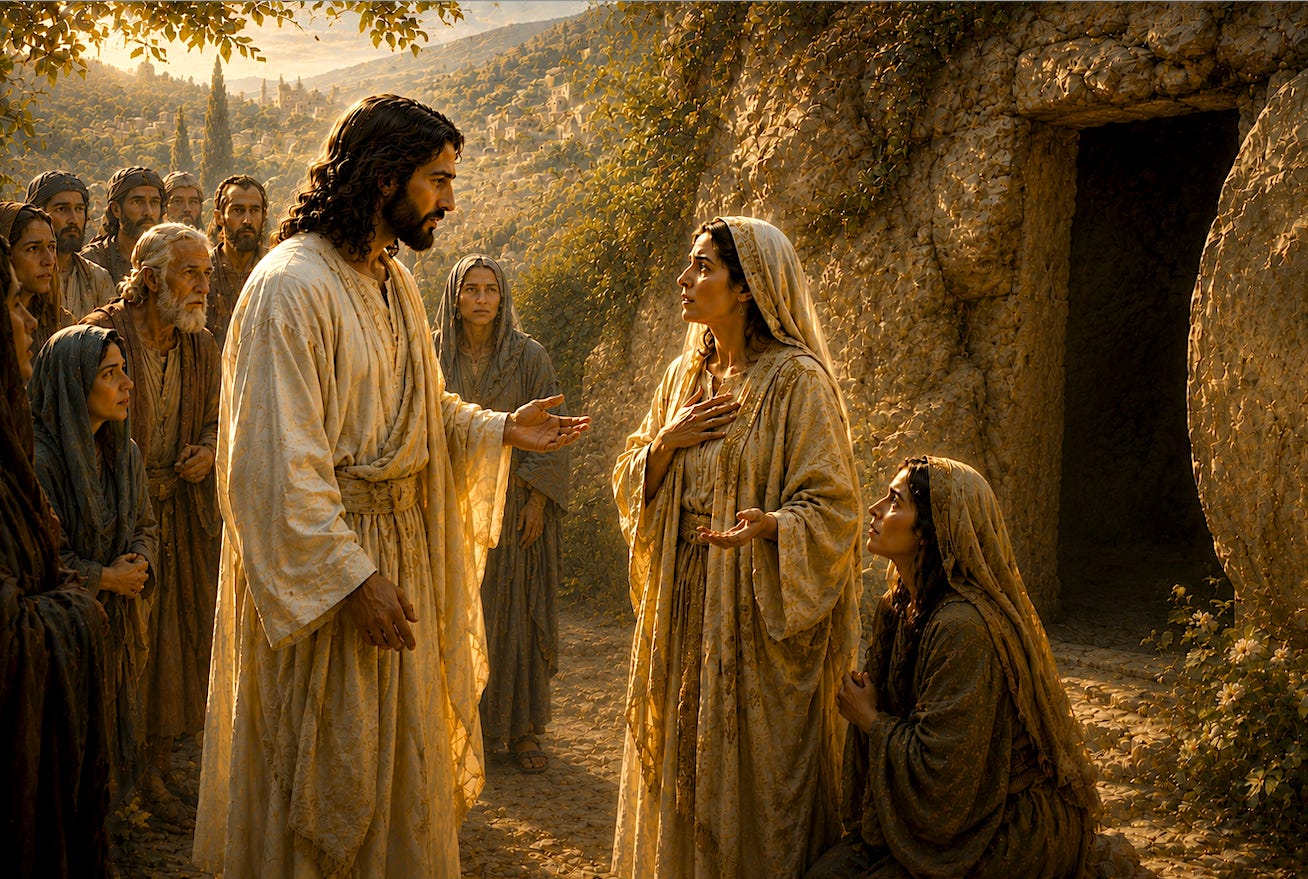
When Jesus arrived, he found that Lazarus had already been in the tomb four days. (John 11.17-27)
Our God is a God who Redeems Us
Jesus doesn’t offer any theoretical apologia in response. Instead he asks where they have laid the body, lets them take him there, sees the burial site, weeps in sorrow, and then raises his dead friend back to life. So why did he let him die in the first place? The story begs that question: Why? Why didn’t Jesus rush down to save Lazarus since he loved him?
The answer to that question teaches a very important lesson about Jesus, God, and faith, namely, that God is not a God who ordinarily rescues us, but is rather a God who redeems us. God doesn’t ordinarily intervene to save us from humiliation, pain, and death; rather he redeems humiliation, pain, and death after the fact.
Simply put, Jesus treats Lazarus exactly the same way as God, the Father, treats Jesus: Jesus is deeply and intimately loved by his Father and yet his Father doesn’t rescue him from humiliation, pain, and death.
In his lowest hour, when he is humiliated, suffering, and dying on the cross, Jesus is jeered by the crowd with the challenge: “If God is your father, let him rescue you!” But there’s no rescue. Instead Jesus dies inside the humiliation and pain. God raises him up only after his death.
This is one of the key revelations inside the resurrection: We have a redeeming, not a rescuing, God.
There is no Escape from Suffering and Death
Indeed, the story of the raising of Lazarus in John’s Gospel was meant to answer a burning question inside the first generation of Christians: They had known Jesus in the flesh, had been intimate friends with him, had seen him heal people and raise people from the dead, so why was he letting them die? Why wasn’t Jesus rescuing them?
It took the early Christians some time to grasp that Jesus doesn’t ordinarily give special exemptions to his friends, no more than God gave special exemptions to Jesus. So, like us, they struggled with the fact that someone can have a deep, genuine faith, be deeply loved by God, and still have to suffer humiliation, pain, and death like everyone else. God didn’t spare Jesus from suffering and death, and Jesus doesn’t spare us from them.
That is one of the key revelations inside of the resurrection and is the one we perhaps most misunderstand. We are forever predicating our faith on, and preaching, a rescuing God, a God who promises special exemptions to those of genuine faith: Have a genuine faith in Jesus, and you will be spared from life’s humiliations and pains! Have a genuine faith in Jesus, and prosperity will come your way! Believe in the resurrection, and rainbows will surround your life!
Would it were so!
But Jesus never promised us rescue, exemptions, immunity from cancer, or escape from death. He promised rather that, in the end, there will be:
Redemption
Vindication
Immunity from suffering, and
Eternal life.
But that’s in the end; meantime, in the early and intermediate chapters of our lives, there will be the same kinds of humiliation, pain, and death that everyone else suffers.
The death and resurrection of Jesus reveal a redeeming, not a rescuing, God.

“For God so loved the world that He gave his only Son, so that everyone who believes in Him may not perish but may have eternal life.” (John 3:16)
Go in Peace —and Glorify the Lord by your Life.

Fr. Ronald Rolheiser is a Roman Catholic priest and a member of the Missionary Oblates of Mary Immaculate (OMI). He is a founder of the Institute for the Study of Contemporary Spirituality at Oblate School of Theology, where he served as president for fifteen years and continues to serve as a full-time faculty member.

Thank you for helping me understand more fully what all this means. I am a senior Catholic who is renewing my faith and learning a deeper understanding of my religion. Still getting to know Jesus.
Thank you Fr. Ron for the very clear explanation of what was for me a puzzle. It is also timely as God did not stop the desecration of Medjugorje. God has good reasons for everything he permits to happen.