

Peter and Paul: Two Disciples, Two Voices, One Lord
From Galilee to Damascus, two Apostles answered Christ's call and helped to build a Church united in faith.

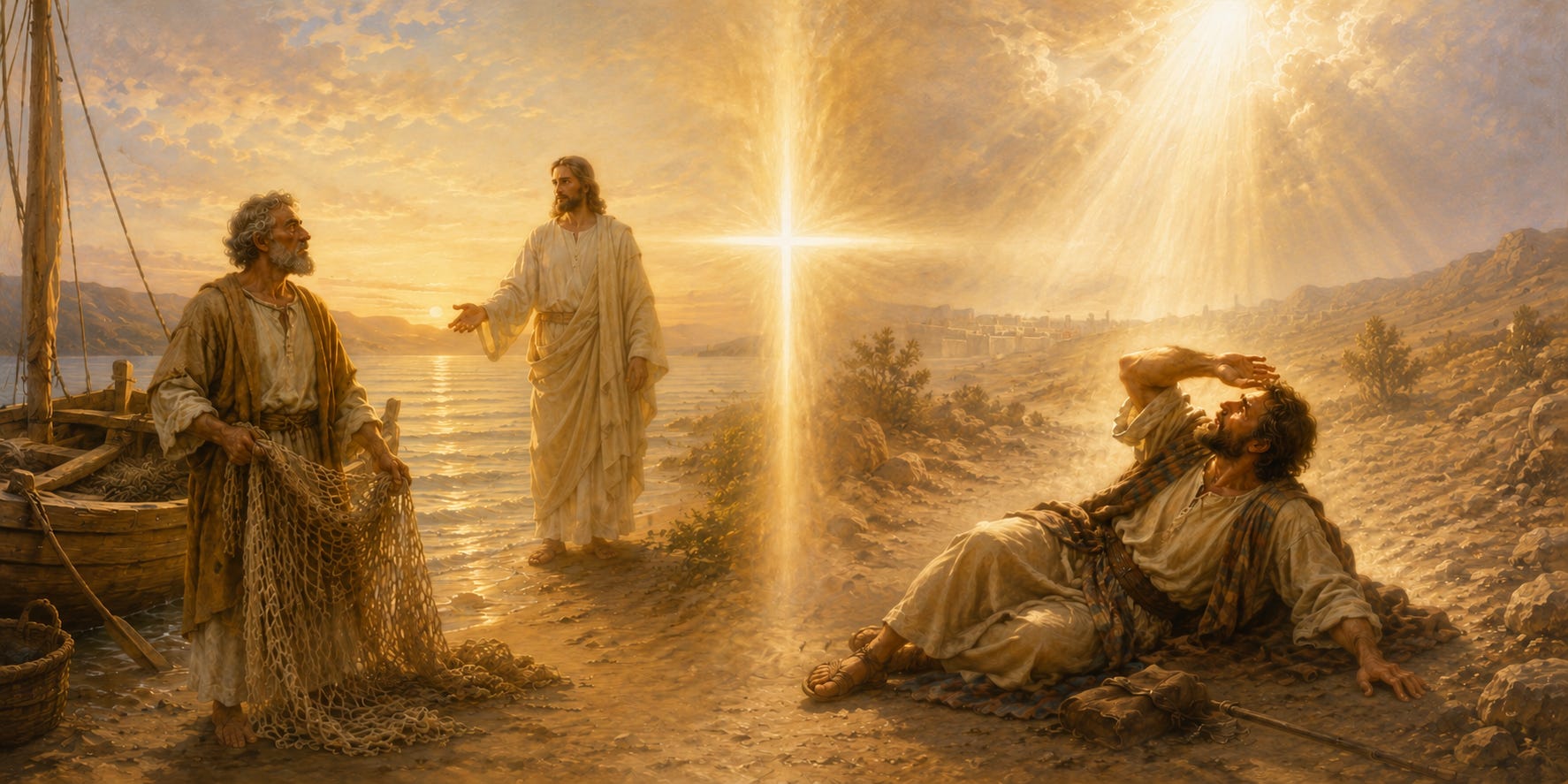
The Calling of St. Peter and the Conversion of St. Paul.
By: Deacon Mike Walsh ©
God’s Call to Us All
On June 29, the Church celebrates the Solemnity of Saints Peter and Paul, two of the most influential disciples in Christian history. Their names are forever linked in the life of the Church, yet their stories could hardly be more different:
One was a fisherman from Galilee.
The other was a highly educated Pharisee.
One followed Jesus from the beginning of his public ministry.
The other spent years persecuting those who followed Him.
Yet despite their differences, Peter and Paul shared the same foundation: Jesus Christ.
Their lives remind us that God calls people from every background, every experience, and every walk of life. He does not ask us to become someone else. Rather, he invites us to bring our unique gifts and voices into his service. The Church has always been enriched by different voices united in one faith.
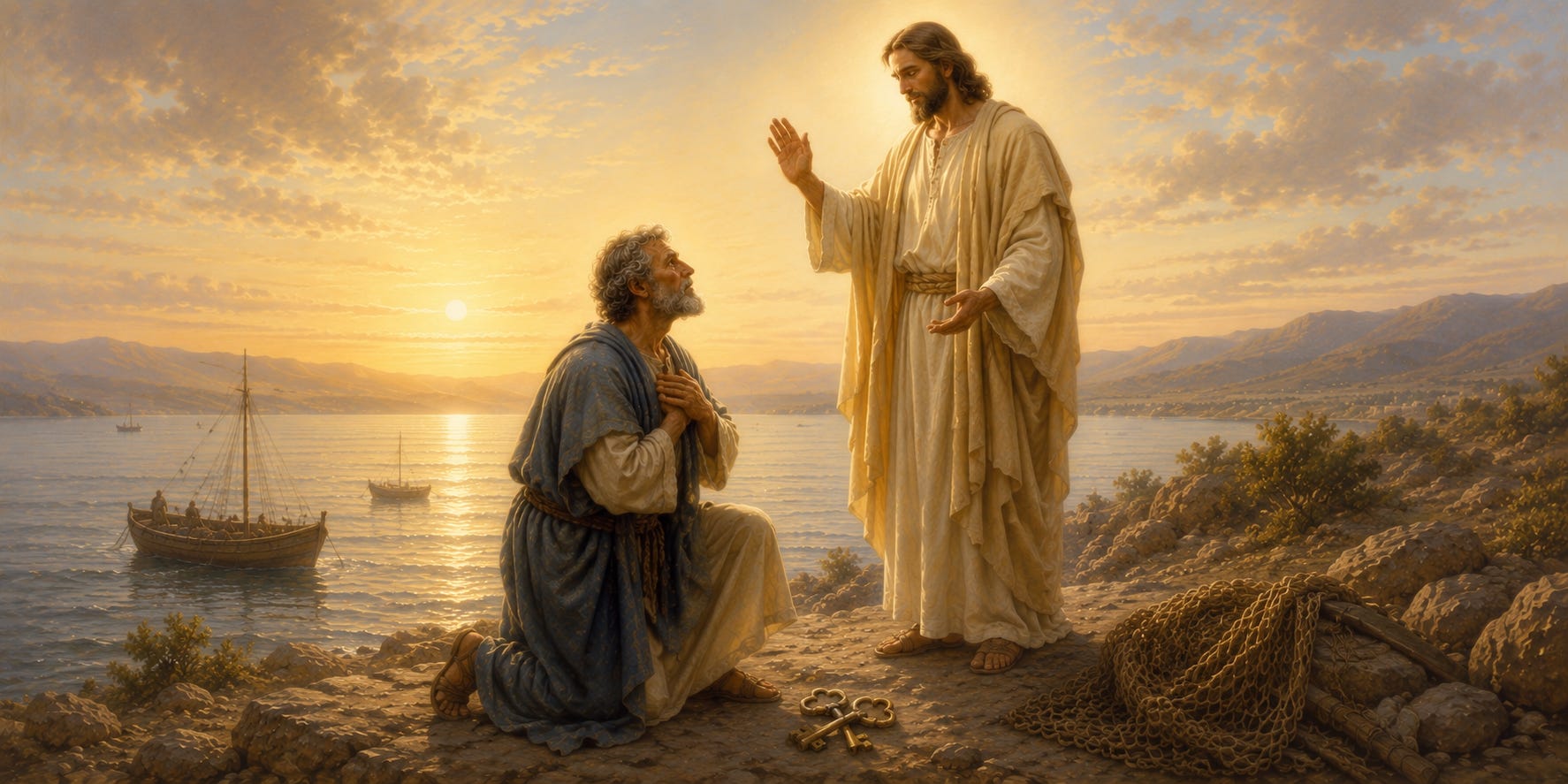
“I will give you the keys of the kingdom of heaven…” (Matt. 16:19)
The Apostle Peter
Peter’s story begins along the shores of the Sea of Galilee. He was a fisherman, working alongside his brother Andrew, when Jesus approached them and offered a simple invitation:
Follow me, and I will make you fish for people. (Matt. 4:19).
Scripture tells us that Peter immediately left his nets and followed Jesus. In the first century, this was a remarkable response. Peter left behind the security of his livelihood and stepped into an uncertain future, trusting the One who had called him.
Peter would become one of Jesus’ closest companions. He witnessed miracles, heard the Master’s teaching firsthand, and was among the first to proclaim that Jesus was the Messiah.
In the Gospel proclaimed on this feast, we hear the moment that would define Peter’s place in the life of the Church. After Peter professed his faith in Jesus, the Lord responded:
Blessed are you, Simon son of Jonah! For flesh and blood has not revealed this to you, but my Father in heaven. And I tell you, you are Peter, and on this rock I will build my Church, and the gates of Hades will not prevail against it.
I will give you the keys of the kingdom of heaven, and whatever you bind on earth will be bound in heaven, and whatever you loose on earth will be loosed in heaven. (Matt. 16:17–19)
These are remarkable words. Jesus did not choose Peter because he was perfect. He chose him because he was willing to place his faith in Christ. The fisherman from Galilee would become the rock upon which Christ would build his Church.
Yet Peter’s journey was not marked by perfection.
On the night of Jesus’ arrest, fear overcame him. Standing in the courtyard while Jesus was being questioned, Peter denied knowing him three times. Finally, with an oath, he declared,
I do not know the man. (Matt. 26:74).
When the rooster crowed, Peter remembered Jesus’ prediction and went away weeping bitterly.
What makes Peter such a powerful witness is not that he never failed. It is that he never allowed failure to define him. And after the Resurrection, Jesus sought him out. Three times Jesus asked,
Do you love me?
And three times Peter answered. With each response came a new commission:
Feed my sheep (John 21:15–17).
The disciple who had denied Christ became the shepherd of Christ’s flock. Peter’s life reminds us that God’s mercy is greater than our failures and that every disciple is capable of beginning again.
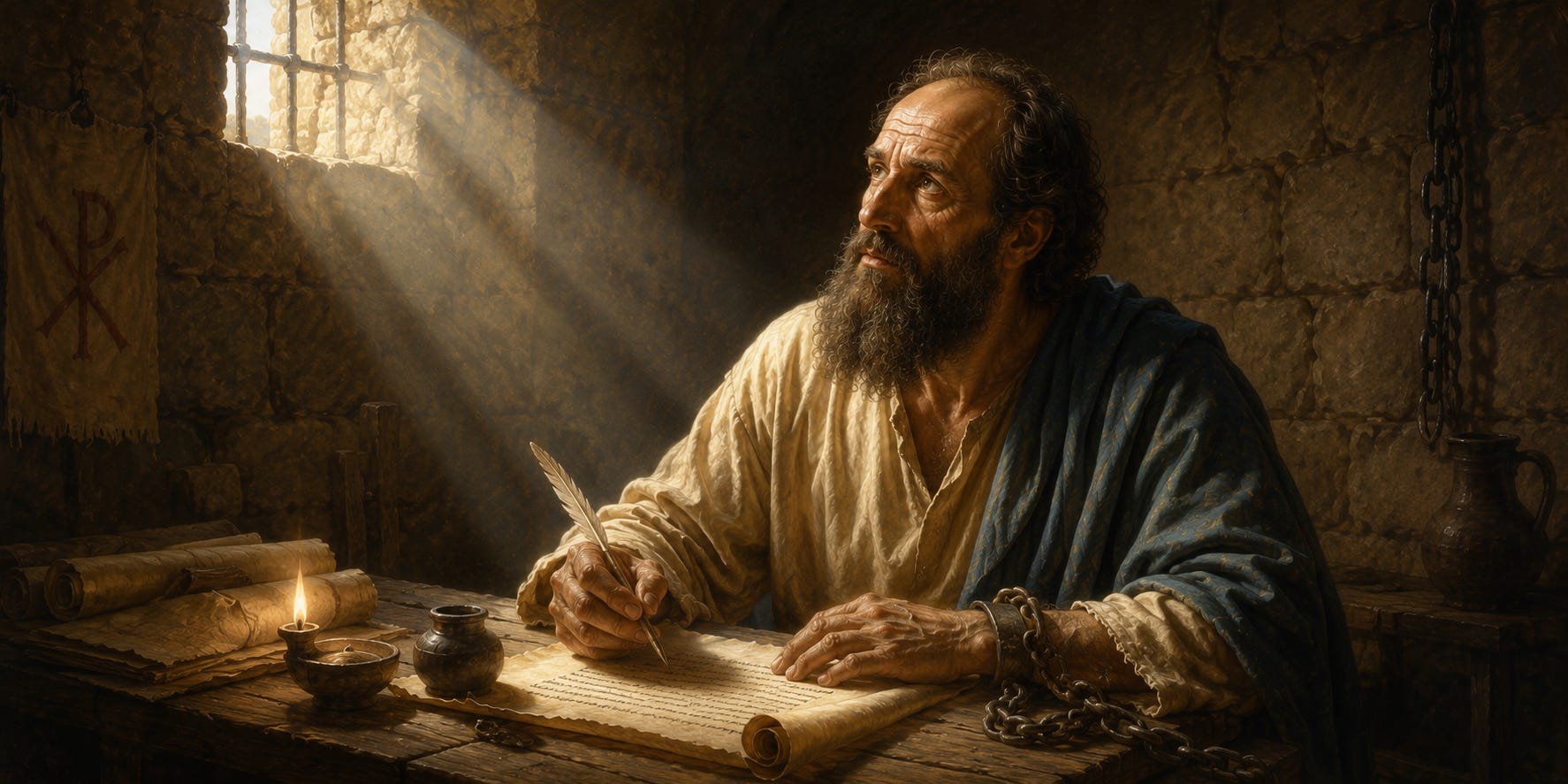
Paul in Prison: "The Lord stood by me and gave me strength." (2 Timothy 4:17)
Paul’s Conversion
Paul’s story begins very differently.
Known first as Saul, he was not a follower of Jesus. In fact, he was one of the fiercest opponents of the early Church. Convinced he was defending the faith of Israel, Saul actively persecuted the followers of “The Way,” as the first Christians were known.
He pursued them relentlessly, believing he was serving God. Then came the moment that changed everything.
While travelling to Damascus, Saul encountered the risen Christ. A brilliant light surrounded him, and he heard a voice ask,
Saul, Saul, why do you persecute me? (Acts 9:4).
The question cut to the heart of his life.
Blinded by the encounter, Saul was led into Damascus where he waited in prayer. There, God called a disciple named Ananias to visit him. Ananias was understandably reluctant. Saul’s reputation as a persecutor had spread throughout the Christian community. Yet Ananias trusted the Lord’s command, welcomed Saul as a brother, and became part of his conversion.
The persecutor became the preacher.
From that moment forward, Paul dedicated his life to proclaiming the Gospel.
He travelled thousands of kilometers across the Roman world, preaching Christ in cities, synagogues, homes, and marketplaces. He endured hardship, imprisonment, shipwrecks, and persecution, yet never abandoned the mission entrusted to him.
Near the end of his life, writing from prison, Paul reflected on the source of his strength and the purpose of his ministry. In the second reading for this feast, he writes:
The Lord stood by me and gave me strength, so that through me the message might be fully proclaimed and all the Gentiles might hear it. (2 Timothy 4:17).
In many ways, these words summarize Paul’s entire life. Everything he endured, every journey he undertook, and every hardship he faced was directed toward one goal: that others might come to know Jesus Christ.
Paul’s letters continue to inspire Christians nearly two thousand years later. His life reminds us that no one is beyond the reach of God’s grace and that a transformed heart can become a powerful instrument of evangelization.
One Church
The early Church needed both Peter and Paul.
Peter provided stability, leadership, and pastoral care. Jesus called him the rock upon which the Church would be built.
Paul, meanwhile, became the tireless missionary who carried the Gospel far beyond Jerusalem and into the wider world.
One helped establish the foundation.
The other helped expand the mission.
Their gifts were different, but both were essential.
The Church has always depended upon a variety of vocations, personalities, and charisms. Peter and Paul demonstrate that God works through many kinds of people to accomplish his purposes.
One Common Mission
Although their paths were different, Peter and Paul shared a common mission: to proclaim Jesus Christ.
Both men experienced the transforming power of God’s grace. Both were called beyond their comfort zones. Both gave their lives in service of the Gospel. Both eventually suffered martyrdom because they refused to abandon the One who had called them.
Their witness reminds us that discipleship is never simply about personal faith. It is about being sent. Having encountered Christ, Peter and Paul carried that encounter into the world around them.
The same is true for us. Each time we participate in the Mass, we are nourished by God’s Word and strengthened by the Eucharist.
Then we are sent forth to live what we have received.
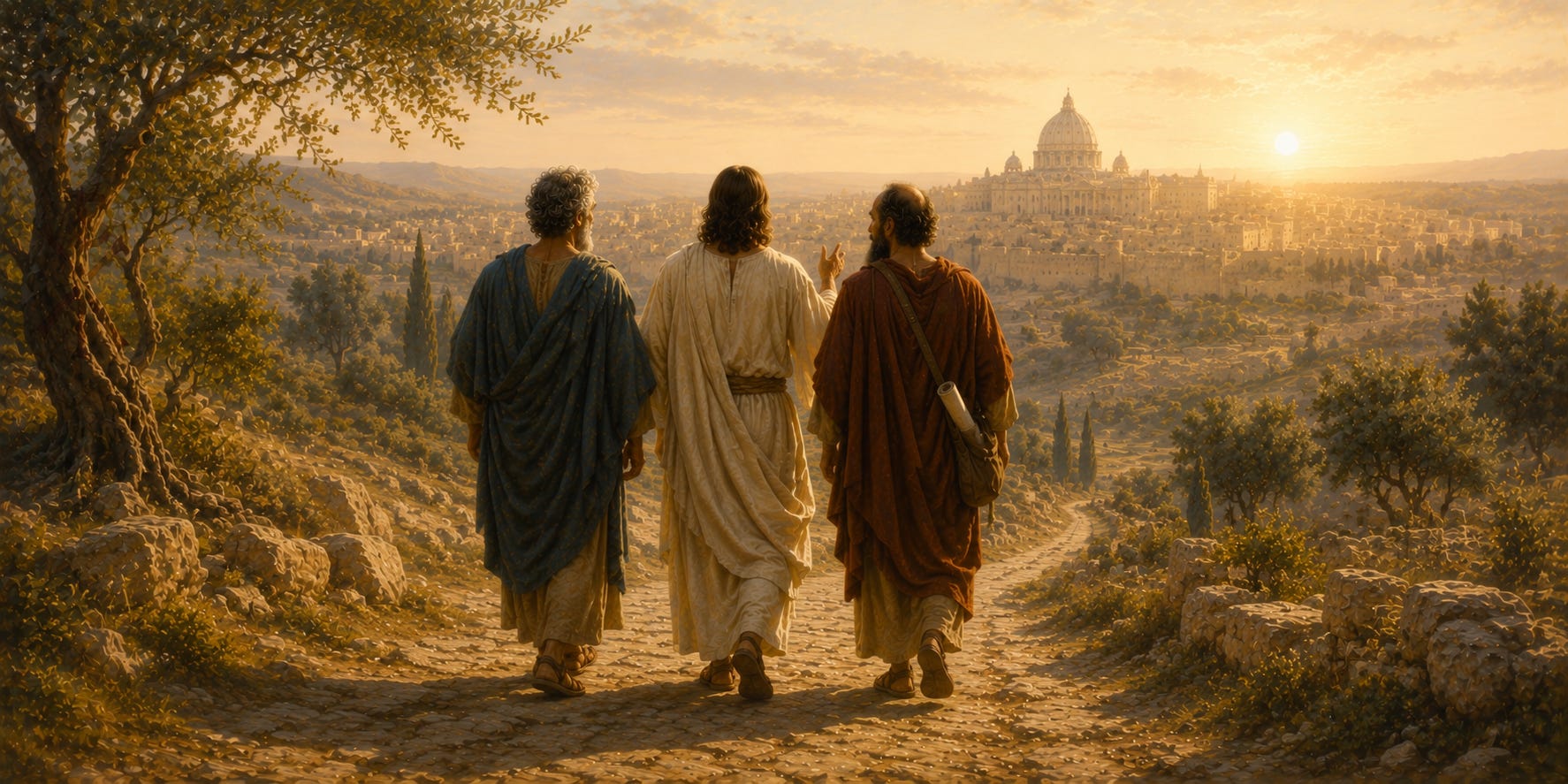
Two disciples. Peter and Paul: Two voices. One Lord.
Two Voices, One Lord
Peter and Paul were different men with different backgrounds, different personalities, and different experiences of faith. Scripture even records moments when they disagreed with one another.
Yet they never lost sight of what united them.
Their unity was not based on having identical opinions or identical journeys. Their unity was rooted in Christ.
That remains a lesson for the Church today. We do not all encounter God in the same way. We do not all express our faith in the same way. We do not all share the same gifts. Yet we belong to one Body because we follow one Lord.
At Go in Peace, we seek to bring together different Catholic voices, each reflecting on how the grace of the Mass can shape daily life. Like Peter and Paul, we come with different experiences and perspectives, but we are united by the same faith and the same desire to follow Christ.
As we celebrate this great feast, may Saints Peter and Paul inspire us to embrace our own unique calling.
Two disciples.
Two voices.
One Lord.
And may we, like them, go out into the world in peace, glorifying the Lord by our lives.
Go in Peace —and Glorify the Lord by your Life.
Please visit our Home page for more articles.

Deacon Mike Walsh serves the Archdiocese of Toronto, leads the Daily TV Mass ministry, and writes about faith, service, hope, and discipleship.

Thanks for spreading God's word and making the Gospel easy to understand. Your reads are simple but powerful. My brother and I watch daily TV mass and appreciate you even more for this extra service you provide with your talent.
Thank you for educating me