

The Spirit of St. Lawrence
The spirit of St. Lawrence and a Deacon’s ministry on the streets of Toronto.

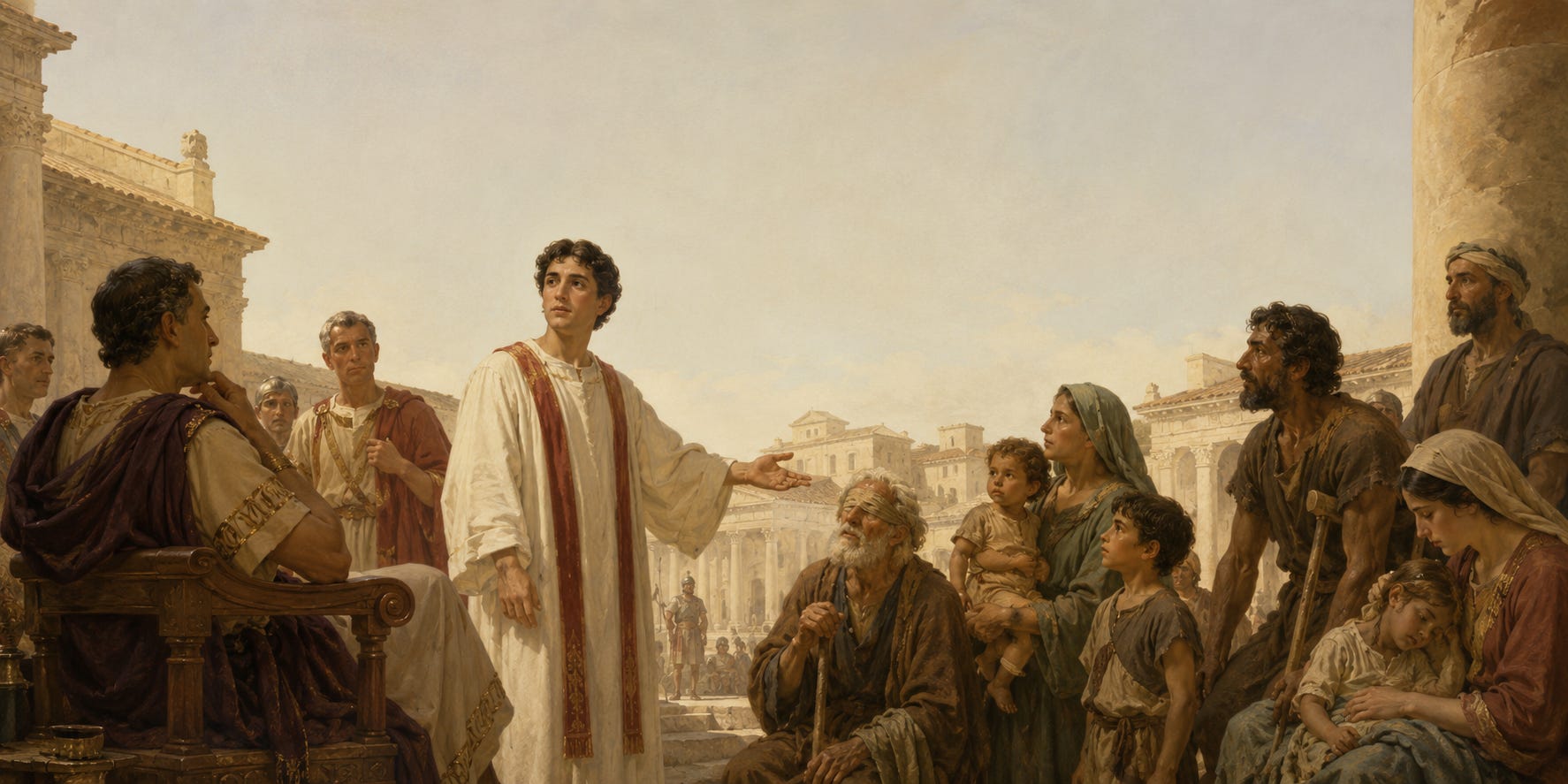
St. Lawrence Presents the Church's True Treasure.
A small piece of Canadian history begins on August 10, 1535.
On that day, Jacques Cartier sailed into a vast body of water. Because it was the feast of Saint Lawrence the Deacon and Martyr, the Gulf of St. Lawrence—and later the St. Lawrence River—would bear his name.
More important than this Canadian connection is the saint himself. Tradition tells us that when Lawrence was ordered to surrender the “treasures of the Church,” he presented the poor and the sick, declaring, “These are our treasures.” His witness captures the heart of diaconal ministry: recognizing Christ in those most often overlooked.
In the reflection below, Deacon Robert Kinghorn explores that same ministry of presence, rooted in the example of St. Lawrence and lived on the streets of Toronto.
Deacon Mike Walsh
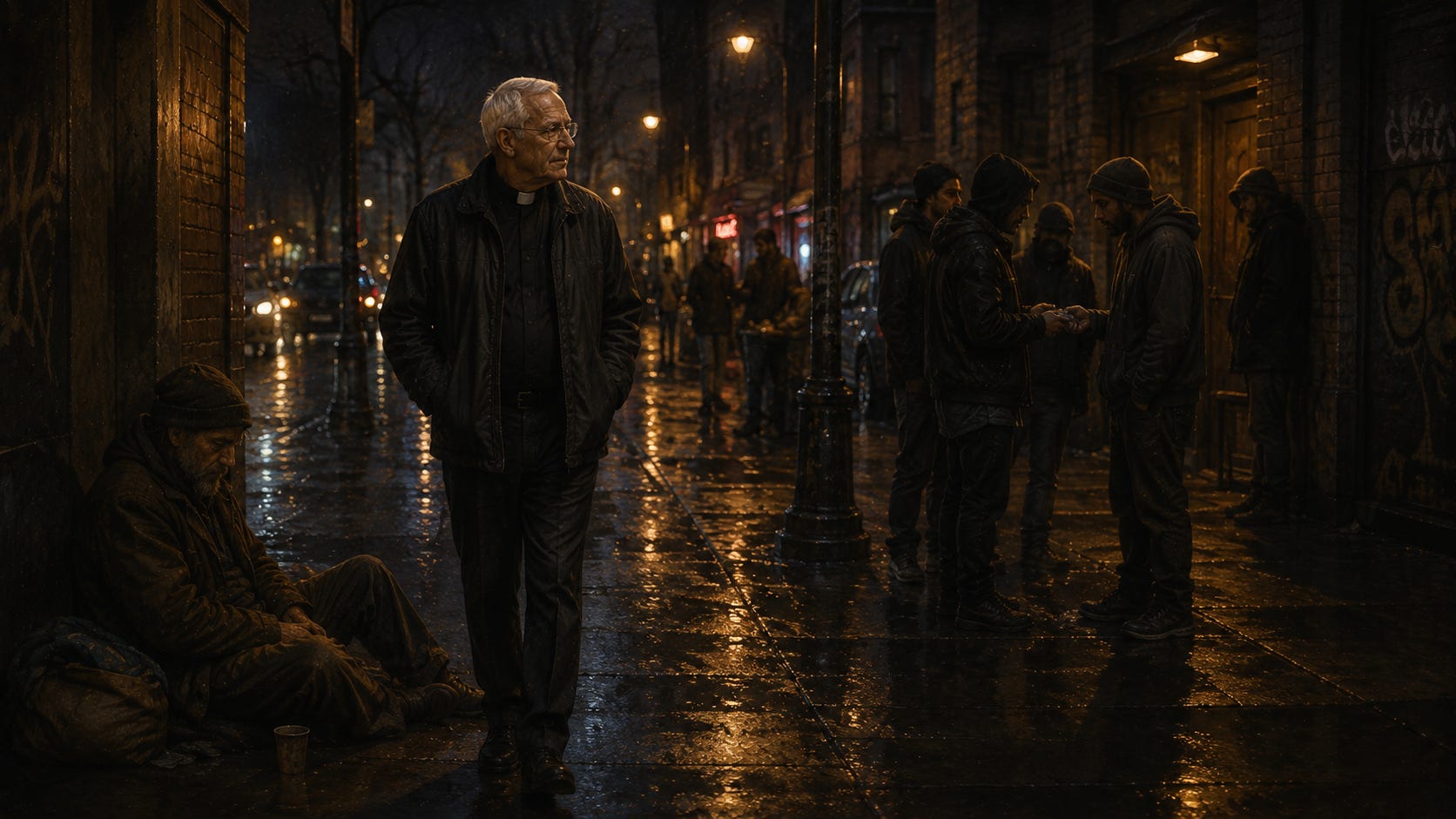
On the Streets of Toronto: “A Ministry of Presence”
The Spirit of St. Lawrence
A Reflection by Deacon Robert Kinghorn
What are you doing in this bad part of the city?
I looked around and saw a young man bent over and out of breath, his roller-blade wheels still spinning in the dark of the evening.
He had seen my clerical collar. The “bad part of the city” he referred to is a Toronto neighbourhood known as “the track,” where prostitution is open and drugs are barely concealed.
I told him I come downtown every week to walk around and chat with people on the street. He wished me a good evening and took off.
The question is haunting. Not in its simplicity, but in its challenge. What am I doing in the bad part of the city? Why are people surprised to see the Church in the “bad part of the city”?
Where else should we be?
My ministry as a Deacon is to be a presence on the streets of downtown Toronto.
Thursday nights I can be found on streets that some consider bad parts of the downtown core. Even there, miracles abound and are just awaiting discovery.
It started in 2004 when I was driving in the downtown area at 1 a.m. to take someone home. The streets were wet and, under a dim light, shadowy figures were negotiating a prostitution deal.
As I surveyed the street, people were scurrying to and fro, some disposing of garbage while others were rummaging through it looking for food and clothes. Still others were clearly on drugs as they purposefully walked and waved their arms as if swatting at imaginary flies.
“The people of the night,” I thought to myself, “this is their existence.”
So where is the Church? I knew the Church was in the drop-in centres such as Good Shepherd Refuge, St. Francis Table and Yonge Street Mission, caring for those who needed food and shelter - but where is the Church on the Street?
It was this simple thought that found me two years later asking permission, first from my wife and then from the Cardinal Archbishop of Toronto, to walk these streets at night as my diaconal ministry of service.
My plan was simple: walk these streets every week at the same time and in the same area, not as a social worker to hand out money, clothing or food, but as a friend who would listen to the cares, dreams and hopes of the “people of the night.”
Perhaps in this simple act of ministry, they would come to believe that God indeed loves them just as they are.
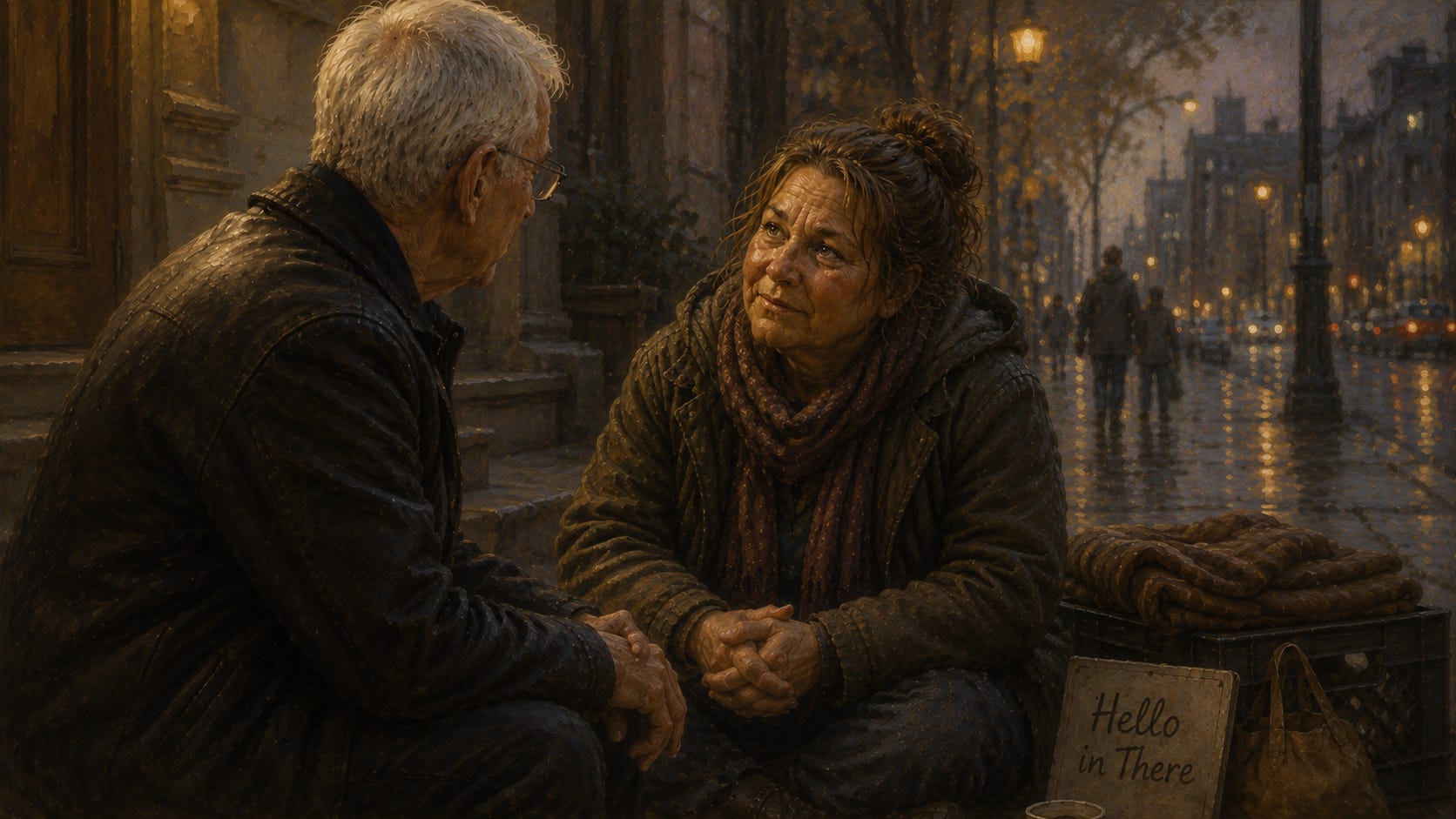
Seeing Christ in Every Person
Meeting Christ on the Streets
In the papal encyclical The Joy of the Gospel, Pope Francis wrote,
I prefer a Church which is bruised, hurting and dirty because it has been out on the streets, rather than a Church which is unhealthy from being confined and from clinging to its own security.
But many people equate healthy spirituality with a life that is centred on church attendance. They have asked me if I have brought those I meet to Christ, but my response is that He is already there; I simply go to meet Him.
Grace is the only answer we have. Grace brings its own freedom as I walk around each week with no agenda. I realize that the day I have an agenda to get people off the street, or to “bring them to Christ” or to “save” them, is the day that I have lost the script that was written many years ago by the One who washed the feet of His disciples; not only those who were to continue to follow Him, but also the one that He knew was about to betray Him.
I have not heard a call to change the people on the streets, but I have heard a call to be changed by them.
We contemplate the face of Jesus in the Eucharist, but can we contemplate His face in the poor?
The Face of Christ in the Poor
This is my challenge. Can I sit in silence and contemplate the people I have met on the street and see Jesus suffering in their bodies?
This to me is the essence of ministry, to be able to contemplate the people we are with and to see the face of Jesus crucified. The same Jesus who said, “This is my body, this is my blood,” also said, “As long as you do it to one of the least of my brothers and sisters, you do it to me.”
We can kneel in adoration in front of the Eucharist and say, “My Lord and my God,” but can we kneel and say, “This is the Lamb of God” in front of the poor on the margins of society? They too have been sacrificed by the abuses of society.
The ministry of presence helps those on the fringes of society to see what we are all called to see—that our brokenness, blindness, un-freedom and sinfulness are what distract us and prevent us from noticing and responding to God’s self-communication.
Those pushed to society’s margins have chosen many distractions to temper the pain of being unwanted and rejected. Like all of us they will forever walk with crutches, but because of their awareness of their pain, they are often more prepared to look for salvation outside themselves than we are.
The diaconate is a call to remind us all that we can contemplate the face of Christ in the poor. It also dares us to believe that hidden there, often behind a deacon’s own prejudices, is the face of Christ crying out to be held, cared for, loved. It is a call to be radically diaconal, unafraid to set all else aside in the service of the family and the poor.
In a world in which position is privilege, a deacon’s call is to renounce position for the privilege of service. This is the charism that a Deacon shares with all who are baptized, and which is sacramentalized in Holy Orders.
Don’t let anyone say the Church is not respected on the streets. The clerical collar is a magnet for people who want to talk of their pain and their experience of God.
Perhaps the fundamental message that we can bring is that their lives, lived in a world shunned by society—the world of drugs, prostitution, violence, homelessness and mental illness—are lives that have been redeemed by Christ. It is the message that we all want to hear in the depths of our confusion and pain: that we are loved and forgiven, no matter what our past has been.
What am I doing in the “bad part of the city”?
I am there to meet Jesus.
I go to find Him among the people of the night,
And to once again find Him in my own heart where His light is too often dimmed.
About this reflection
This article is excerpted from Deacon Robert Kinghorn’s first book, The Church on the Street, and originally published in The Catholic Register on Dec.8, 2019.
Deacon Kinghorn’s second book, Christ on the Street: Ministry of Presence, expands on this ministry of accompaniment and explores the spiritual foundations of being present to those on the margins. It is available here:
For purchase in Canada
For purchase Outside of Canada
(Excerpt reprinted with permission.)
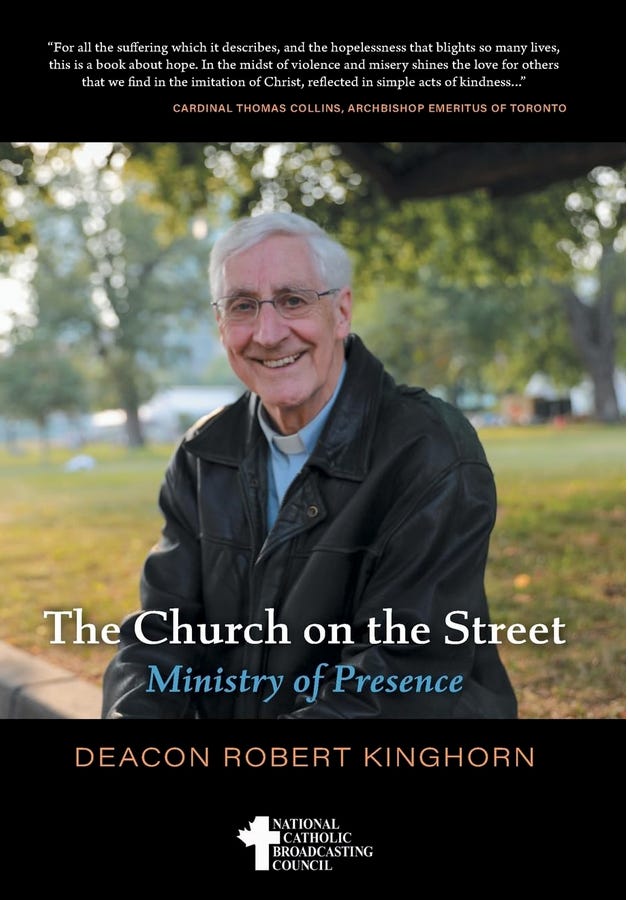
Go in Peace and Glorify the Lord by your Life.
Deacon Robert Kinghorn is founder of The Church on the Street ministry, a regular columnist for The Catholic Register, and a speaker on faith, compassion, and hope.

Deacon Robert, I have always enjoyed your experiences with “people on the street.” We have a son who has been an addict for 24 years and it has broken our hearts and truly taught us humility. He was only on the streets once and for a short period of time because he always seeks out a detox center followed by treatment. He has been in treatment 27 times and he is one of the nicest, most respectful and nonjudgmental people I know. He has always done best when he is going to church or doing charitable activities. He has always stood up for the underdog and never lets us ever say anything unkind about anyone in his presence. Your stories and sharing have helped me and our son. Thank you so very much!
Bless you Dcn Kinghorn, for your ministry to street folk.