

The Month of the Most Precious Blood of Jesus
July Devotion

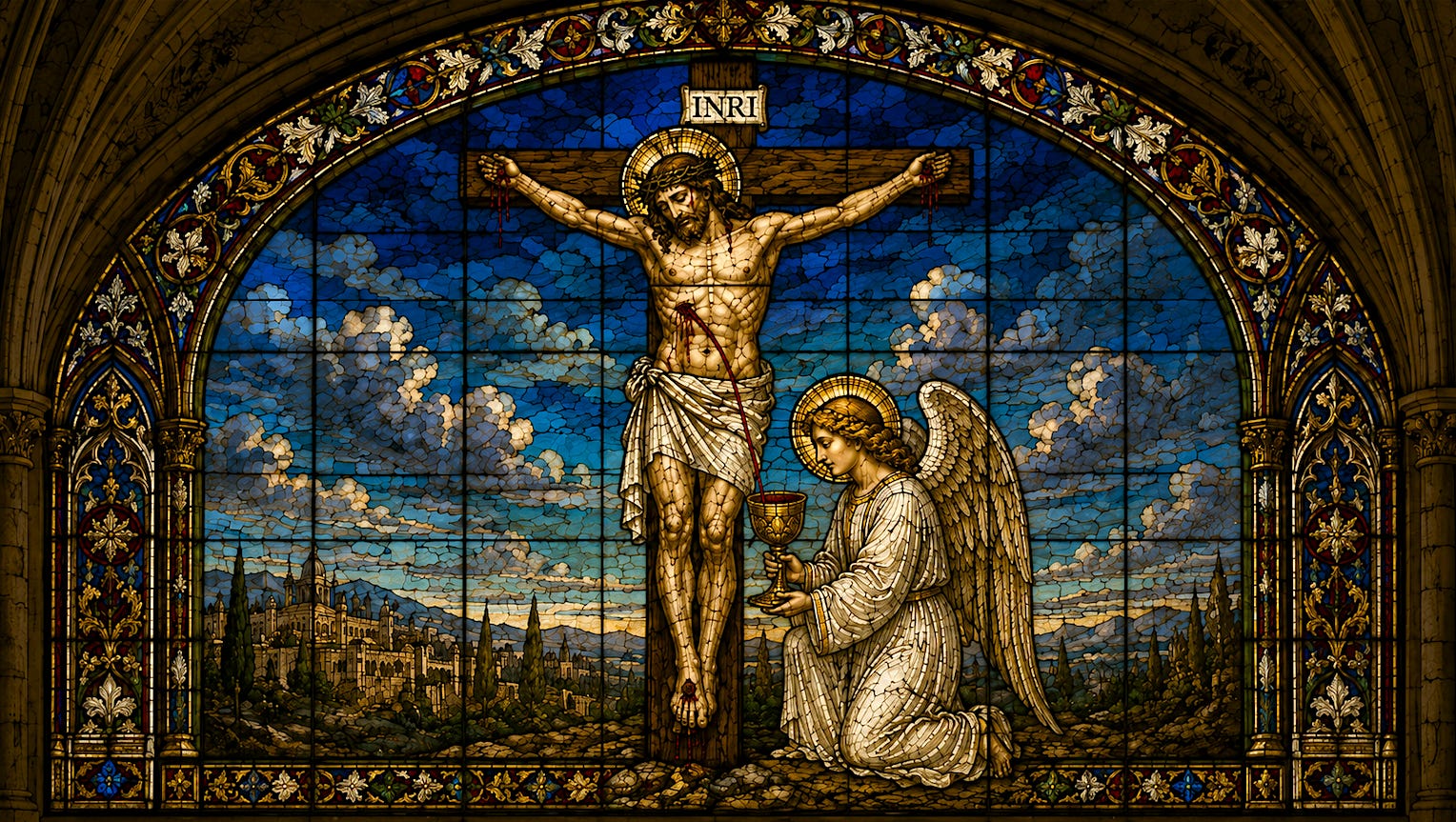
Jesus’ Blood: The Fountain of Mercy
By: Sr. Helena Burns, FSP ©
“What Can Make Me Whole Again?”
July is the month of the Most Precious Blood of Jesus Christ, beginning with July 1, Canada Day, which is also the Feast of the Most Precious Blood. Just to say those words: “Most Precious Blood of Jesus” feels so sacred—and it is! After all, it was His blood that expiated our sins and saved the world. I must admit that I’m partial to the wonderful, rousing Protestant hymns:
There is power, power, wonder-working power in the Precious Blood of the Lamb!” “What can make me whole again? Nothing but the blood of Jesus!,
. . . as well as the invoking of the Precious Blood by all manner of Christians in different ways: for covering, for protection, for blessing. Who can forget the thrilling scene at the end of “Ben Hur,” when the blood of Jesus, mixed with rain, pours down Golgotha and touches him?
I remember when a parish in Toronto was introducing Holy Communion under both species. Instructions were given as to how to receive. We were to receive the Body of Christ first, and then, if we wished, to approach the cup.
It was fascinating to see how much more reverence people automatically had for the Precious Blood than the Blessed Sacrament. Some people did multiple bows first. A couple of people prostrated themselves in front of the cup before receiving. And yet, the Body is just as much Jesus as the Blood, so much so, that it is not necessary for the congregation to ever receive the Precious Blood.
When we receive the Host, we receive the complete Jesus: Body, Blood, soul and divinity. The same holds if we were to only receive the Blood. In fact, we have a few Sisters with celiac disease (they can’t have even the tiniest bit of gluten), and so they only receive from the cup.
In Eucharistic miracles, the Host often bleeds, showing us the unity of Jesus’ Body and Blood.
Jesus’ Blood: The Fountain of Mercy
All ancient religions always incorporated sacrifice into their worship, usually the shedding of animal blood. Jesus Himself is the final Sacrifice that ended all other sacrifices, and we are privileged to participate in it at every Holy Mass.
The book of the Bible that mentions the Blood of Jesus the most, is one of my favourite books, the Letter to the Hebrews, which many scholars believe was written, in part, for the priestly class. Blood was seen as the seat of life, so even how the blood of animals was treated had many stipulations. The first Council of the Church (the Council of Jerusalem recorded in Acts of the Apostles) had to deal with this.
There are wonderful devotions honouring the Precious Blood. Right in the Divine Mercy prayers, are several mentions of Jesus’ Blood as a fountain of mercy. The Precious Blood chaplet recalls each time in Jesus’ life He shed His blood for us.
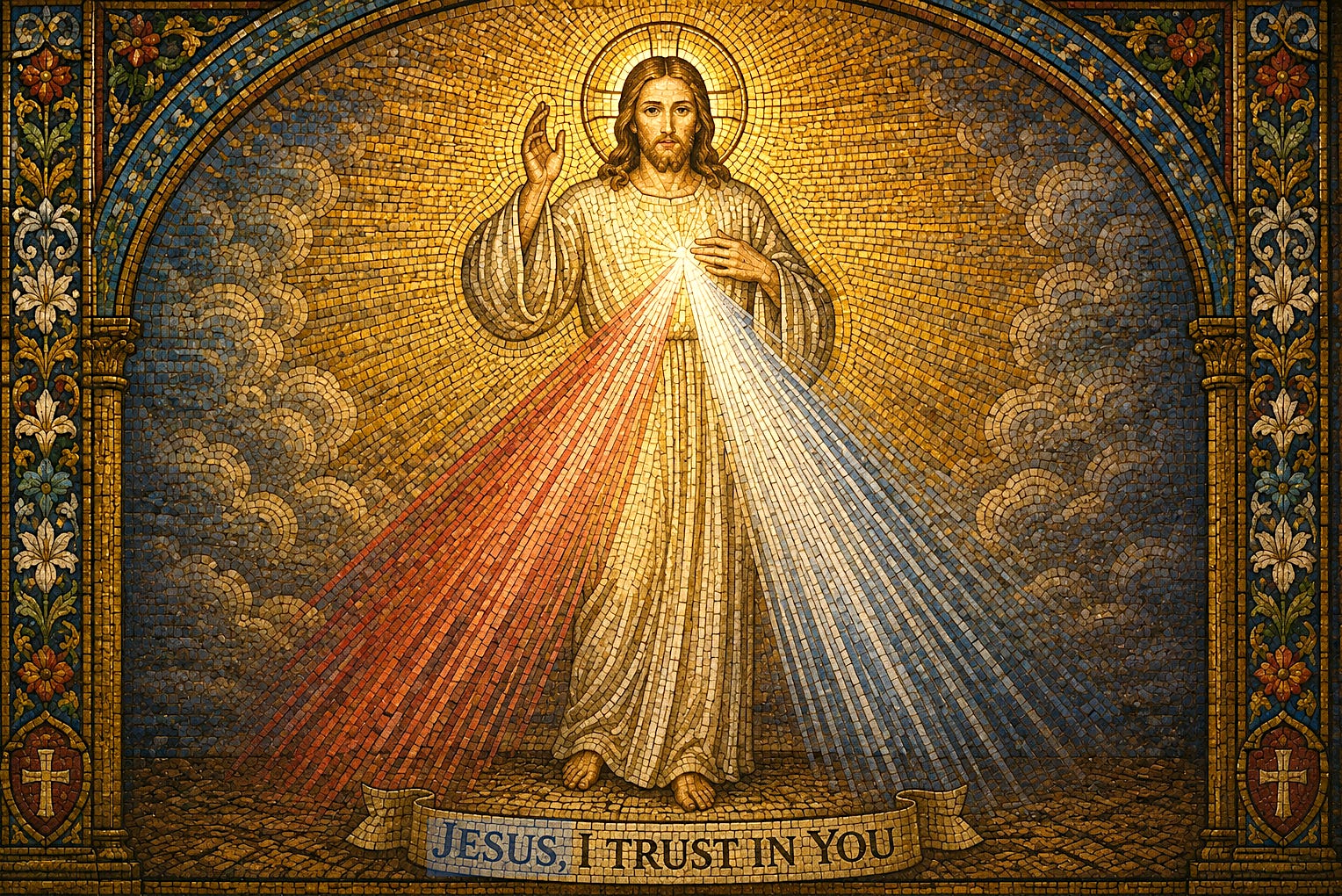
“Jesus, I Trust in You”
The Body and Blood of Jesus in our Midst
If you drive through Quebec, many churches prominently feature a statue in front of their building of a Crucifix and three who were at the foot of the Cross: the Blessed Mother, St. John and Mary Magdalene.
Certainly, drops of Jesus’ blood must have fallen on them, to say nothing of when Joseph of Arimathea and Nicodemus took His body down, and His Mother and the other holy women washed and prepared Him for burial. I might be theologically way off base here, but every time I hear the Scripture passage where the crowds, demanding Pilate condemn Jesus to death, cry: “His blood be upon us and upon our children!”, all I can think of is the fact that Jesus’ blood does not seek vengeance. It forgives.
This past liturgical cycle is the first time I realized that the New Testament is very much about martyrdom. What are the readings and feast days right after Christmas and Easter? Martyrs: shedding one’s blood for Christ. Yikes! And of course, we’re all called to “white martyrdom”:
In your struggle against sin, you have not yet resisted to the point of shedding your blood. (Hebrews 12:4)
When people are searching for God or investigating the Catholic Church, I often help them along the intellectual route (naturally, we Daughters of St. Paul are “media nuns” who teach through media).
But how often do I tell people about the Body and Blood of Jesus in our midst and encourage them to simply sit in front of Jesus in the Tabernacle in a church or chapel and let Him take over?
Go in Peace —and Glorify the Lord by your Life.
Sr. Helena Burns, FSP is a Daughter of St. Paul, an international religious congregation dedicated to proclaiming Christ through media and culture. A sought-after speaker, author, media literacy educator, and regular contributor to The Catholic Register, she presents workshops across Canada and the United States on faith, media, and St. John Paul II: Theology of the Body.
Thank you, Sister, for the gentle reminder. So many of us are unable to attend Mass and to receive both the host and the wine. I am fortunate that a lay minister comes every week with the host. I often thought about receiving the blood of our dear Lord, now I uderstand I am receiving both.
I appreciate this reflection. Thank you, Sister. 🙏🏻